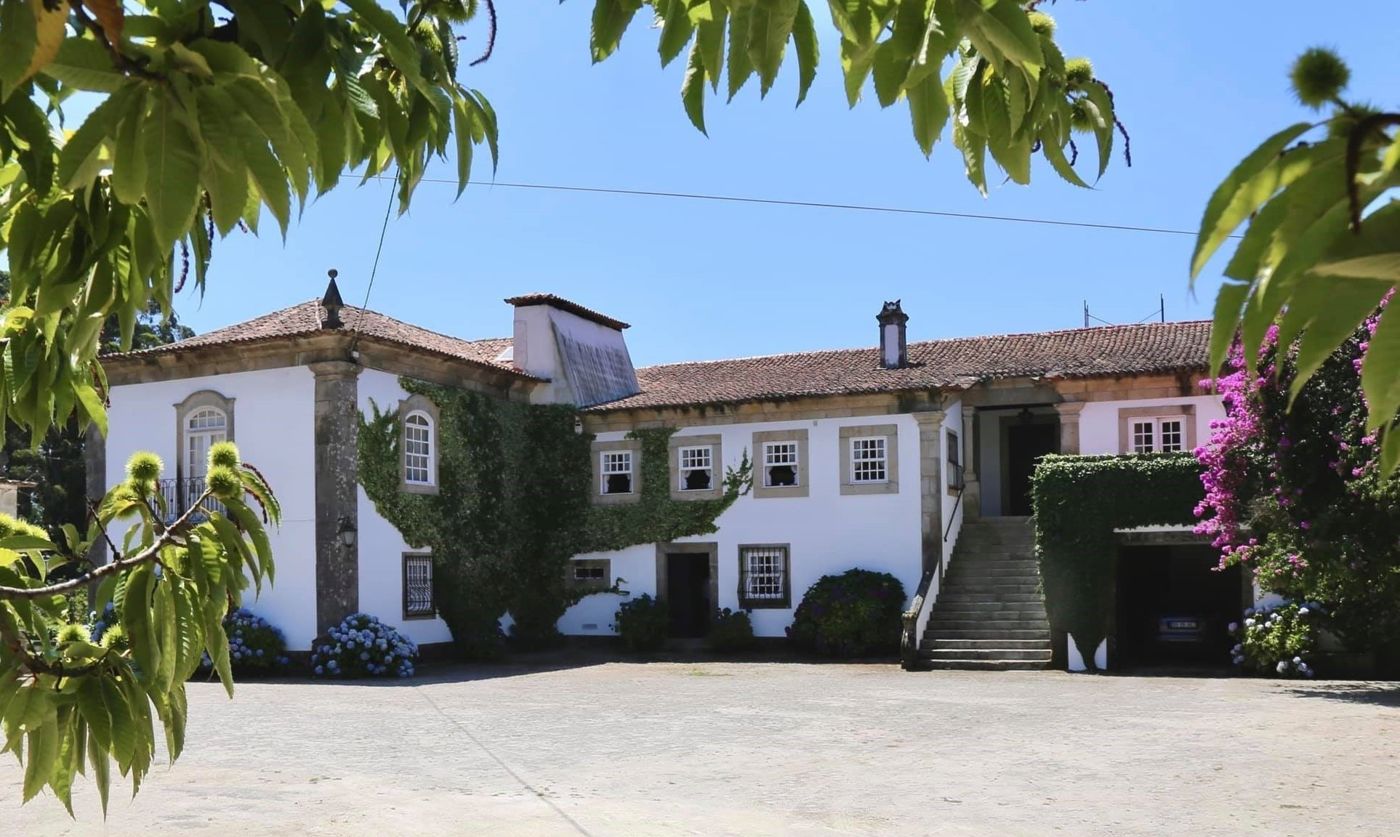
Hidden in the lush landscapes of northern Portugal, Casa de Sá is one of the most fascinating historic manor houses in the Lima Valley. Located near Arcos de Valdevez, this noble estate tells a story that stretches across centuries of Portuguese history, diplomacy, agriculture, and aristocratic life.
Recognized as a Property of Public Interest, Casa de Sá belongs to one of Portugal’s oldest noble families. While many travelers exploring northern Portugal focus on well-known destinations such as Ponte de Lima or the Peneda-Gerês National Park, this historic house remains one of the region’s lesser-known cultural treasures.
For visitors interested in Portuguese heritage, noble estates, and the history of the Enlightenment era, Casa de Sá offers a unique window into the past.
The Origins of Casa de Sá
The earliest historical reference to the estate dates back to 1501, when the property belonged to the Monastery of Ázere in Arcos de Valdevez. At that time, the land was leased to the noble couple João da Cunha and Violante Barbosa.
During the 18th century, the estate passed into the hands of Tristão de Araújo de Azevedo, a magistrate who later became a judge at the Court of Appeal in Porto. His marriage to Violante Pereira Pinto united two prominent family lineages, and their combined coat of arms can still be seen above the entrance gate of the manor house.
Over time, the estate expanded and evolved into a traditional Portuguese manor house, combining residential elegance with agricultural productivity.
Architecture and Rural Life in the Lima Valley
Casa de Sá is an excellent example of the rural noble estates that shaped the social and economic landscape of northern Portugal.
Like many manor houses in the region, it served multiple functions:
-
A family residence
-
A hunting and leisure estate
-
An agricultural production center
The estate included gardens and wooded areas used for recreation, but its economic strength came from agriculture.
Among the most important structures were:
-
A large wine press
-
A wine cellar with enormous barrels
-
Granaries used to store corn and other crops
These facilities reveal how aristocratic estates in northern Portugal were closely connected to agricultural production and the management of rural lands.
The house itself was redesigned in the 18th century by António de Araújo de Azevedo Fagundes, who reorganized the façade with elegant arched windows overlooking the Lima Valley.
The estate also includes a chapel dedicated to Our Lady of the Rosary, built during the first half of the 18th century by Maria Pereira Fagundes.
The Count of Barca: A Remarkable Portuguese Diplomat
The most famous member of the family was António de Araújo de Azevedo (1754–1817), later known as the Count of Barca.
He was one of the most influential Portuguese intellectuals and diplomats of his time and a figure deeply connected to the ideals of the European Enlightenment.
His interests were remarkably diverse. He studied:
-
Literature
-
Botany
-
Chemistry
-
Mineralogy
He also played an important role in the early industrial development of Portugal.
In 1787, he was appointed plenipotentiary minister in The Hague, representing Portugal in one of Europe’s key diplomatic centers.
Later, during the turbulent years of the French Revolution, he negotiated Portugal’s political position in Paris. During this period, he was briefly imprisoned in the Bastille, one of the most famous prisons in European history.
His diplomatic career continued with appointments in Russia, and he eventually became:
-
Counselor of State
-
Secretary of Foreign Affairs and War
Life in Brazil and the Title of Count
When the Portuguese royal family relocated to Brazil in the early 19th century, António de Araújo de Azevedo followed the court to Rio de Janeiro.
There, he became an influential political figure and played a significant role in the cultural and social life of the royal court.
Recognizing his service, Prince Regent Dom João granted him the noble title of Count of Barca.
The diplomat spent his final years in Brazil, where he died in 1817, leaving behind an important intellectual and political legacy.
A Historic Archive of More Than 500 Years
One of the most valuable treasures of Casa de Sá is its historical archive and library.
Inside the house are thousands of books and documents, carefully preserved and organized. These materials represent over 500 years of family and regional history.
Today, the estate is owned by Miguel Tovar Ayres de Campos, a scholar with a doctorate in Medieval Art History from the Courtauld Institute of Art in London.
He has dedicated years to researching the archives of Portuguese noble families and promoting public access to historic collections.
The VINCULUM Project and Opening Historic Archives
Casa de Sá has become part of an important cultural initiative known as the VINCULUM project, which aims to bring the archives of historic Portuguese houses closer to researchers and the public.
Through this project and related research efforts, the archives of Casa de Sá were opened to the community in 2024, providing historians and visitors with rare insight into the social, economic, and political history of the Lima Valley.
Visiting the Lima Valley and Arcos de Valdevez
The region surrounding Casa de Sá is one of the most beautiful areas of northern Portugal.
The Lima Valley combines historic villages, green landscapes, vineyards, and cultural landmarks. Nearby destinations include:
-
Arcos de Valdevez, known for its medieval heritage and scenic riverfront
-
Ponte de Lima, the oldest town in Portugal
-
Peneda-Gerês National Park, famous for its mountains and waterfalls
Exploring this region offers travelers a deeper understanding of Portugal’s rural history and aristocratic traditions.
Casa de Sá stands as a reminder of how noble estates once shaped the cultural and economic life of the region.
Why Casa de Sá Is One of Northern Portugal’s Hidden Gems
Unlike many historic estates that have become large tourist attractions, Casa de Sá remains relatively unknown. This makes it particularly fascinating for travelers interested in authentic heritage sites.
The house represents a unique combination of:
-
Portuguese noble history
-
Enlightenment-era diplomacy
-
Rural agricultural traditions
-
Historic archives and research
For those exploring northern Portugal beyond the typical tourist routes, Casa de Sá offers a rare glimpse into centuries of aristocratic life in the Lima Valley.


