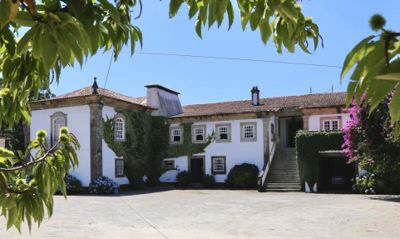
Located in the Demarcated Douro Wine Region, the city finds in its precious nectar the reason for its prominence, but it was also the stage of ancient wars and conquests.
Lamego is an unusual city, in the best sense of the word, given the many facets it reveals and invites visitors to discover. It is a historic and festive land, proud of its past, monumental in its civil and religious architectural heritage, filled with northern aromas and flavors, and showcasing one of its most genuine traditions during the Entrudo de Lazarim.
It is also an ancient city, marked by an episode deeply connected to the founding of Portuguese nationality. It was here that the first Cortes gathered to recognize Dom Afonso Henriques as King of Portugal. All of this happens with the Douro River so close by, like a siren’s song appealing to the senses.
Lamego is a city of neighborhoods, each with distinctive features and, often, emblematic buildings that justify their identity.
The best place for a first introduction to Lamego is the tree-lined Avenida Doutor Alfredo Sousa, the true nerve center of the city. Walk along it carefully, because throughout its length you will find several examples of beautiful manor houses and typically northern mansions.
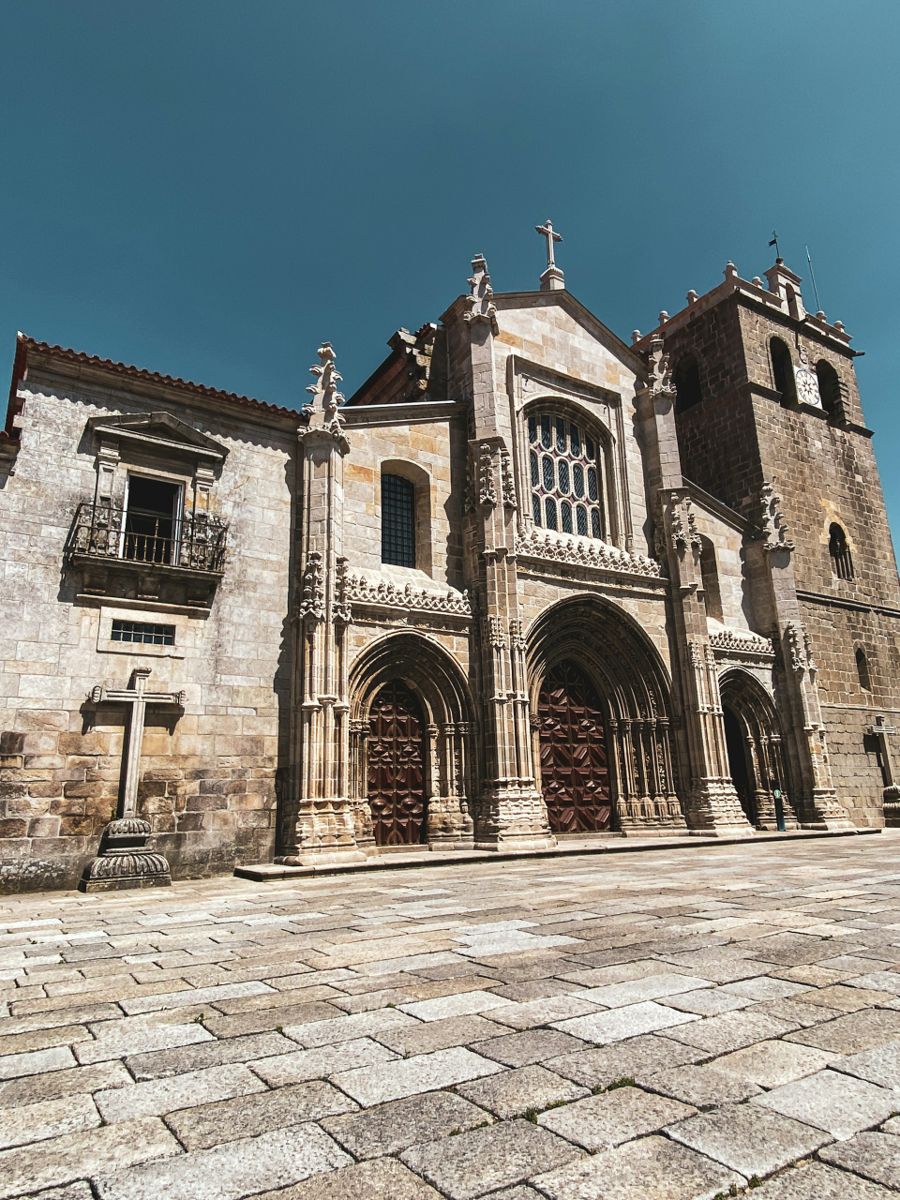
At the end of the avenue, you arrive at Largo da Sé, where the cathedral stands and the view is striking. The Sé, dating back to 1129, retains its Romanesque style only in the bell tower, since the rest of the complex reflects renovations carried out in the sixteenth century, which gave it the Gothic appearance it has today.
In the surrounding area, there is the Lamego Museum, which showcases a valuable collection of sacred art, Flemish tapestries, and noble furniture. Nearby, at the far end of the square, stands the former Misericórdia Hospital, now Teatro Ribeiro Conceição, whose interior surprises visitors with one of the country’s great performance halls.
To learn about the origins of ancient Lamecum, you must climb up to the castle, which, as the name suggests, dates back to Roman times. Naturally, it underwent remodeling by the peoples who later occupied it. The Visigoths called it Lamico and the Moors called it Lameca.
It was not only Christians and Muslims who found refuge in Lamego. Many Jews also settled here, as evidenced on Rua Nova, near the castle, where the synagogue once stood.
Still in the castle area, a visit to the Porta dos Figos Archaeological Center is worthwhile, where Roman-era artifacts are on display.
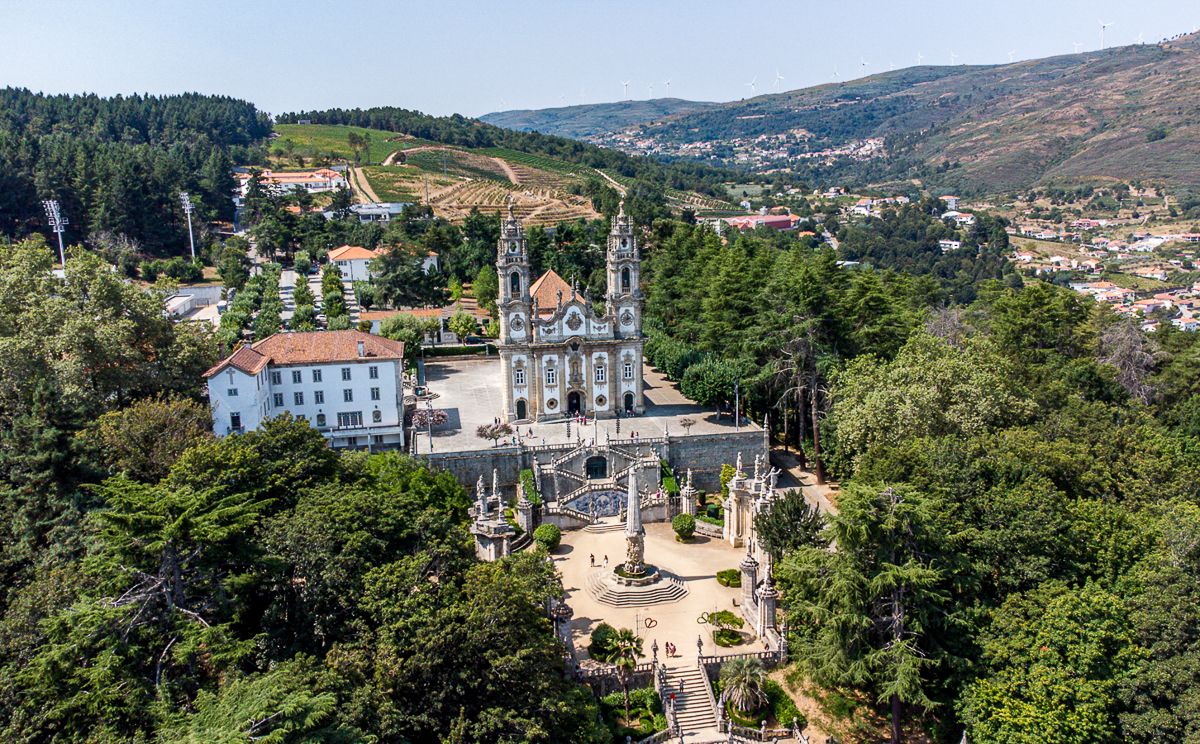
The great ex-libris and major attraction for locals and visitors alike is the Sanctuary of Nossa Senhora dos Remédios, built in Baroque style in the eighteenth century. It hosts the festivities held in September, complete with fair and procession.
THE SACRED AND THE PROFANE
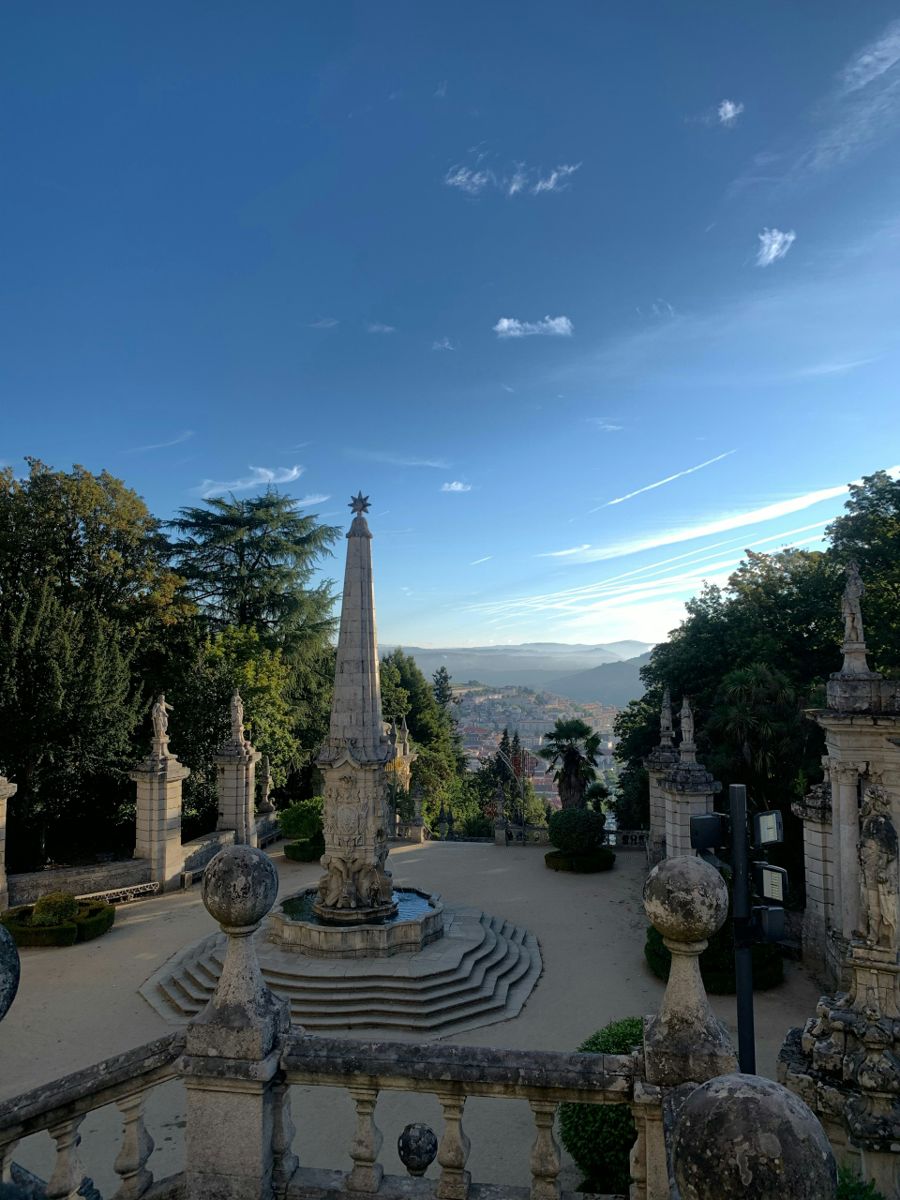
The main gate of the Sé or the Baroque staircase with its 686 steps leading up to the Sanctuary of Nossa Senhora dos Remédios contrasts with the liveliness of the Lazarim Caretos, pagan figures who take to the streets during Carnival.
ICONS OF THE NORTHERN DOURO
On the slope of the Serra de Leomil, the Monastery of São João de Tarouca, shown on the left, began construction in 1154. The Ucanha Bridge is one of the earliest toll bridges in Portuguese history and connected Lamego to Riba-Côa.
The sanctuary is impressive, with its profusion of staircases, columns, fountains, and decorative tile panels.
If Lamego is inviting, its surroundings are equally so, with places worth a small detour. In the municipality of Tarouca, spanning the Varosa River, stands the fortified Bridge of Ucanha, probably of Roman origin and corresponding to the first toll gate of the young Portuguese kingdom. The adjacent medieval tower helps create a setting of rare beauty.
To complete the array of religious buildings, the Monastery of São João de Tarouca is one of the finest examples. Built in 1154, it was the first monastery of the Order of Cister in Portuguese territory.
Beyond the many reasons that make Lamego an essential stop on any tourist itinerary, its soul lies in the Demarcated Douro Region. Vineyards have been cultivated here since time immemorial, in lands that later gave rise to Port wine and sparkling Raposeira. Each season drapes the terraced slopes with a vibrant palette of colors, including greens, browns, and grays, in a play of tones that shape the landscape and soothe the soul.
Finally, there is the cherry on top. There are several ways to appreciate this land shaped by terraces embracing the peninsula river, but one of them is close at hand, the Port Wine Trail. Along it, you will fall in love with the breathtaking views of the wine-growing Douro. It is meant to be explored on foot, with proper respect for the oldest demarcated wine region in the world.